

 Print
Print  Share
Share  Text
Text  To reset, hold the Ctrl key, then press 0.
From pharmaceuticals to hospitals, the health-care sector accounts for about five per cent of global greenhouse gas emissions.
This begs the question: Can hospitals care for our communities and take better care of our planet?
Recognizing the growing need to consider the “carbon cost” of health care, research by The Ottawa Hospital’s Pharmacy team shows that thoughtful, practical changes can deliver the same patient outcomes while reducing environmental impacts.
A closer look at inhaler waste
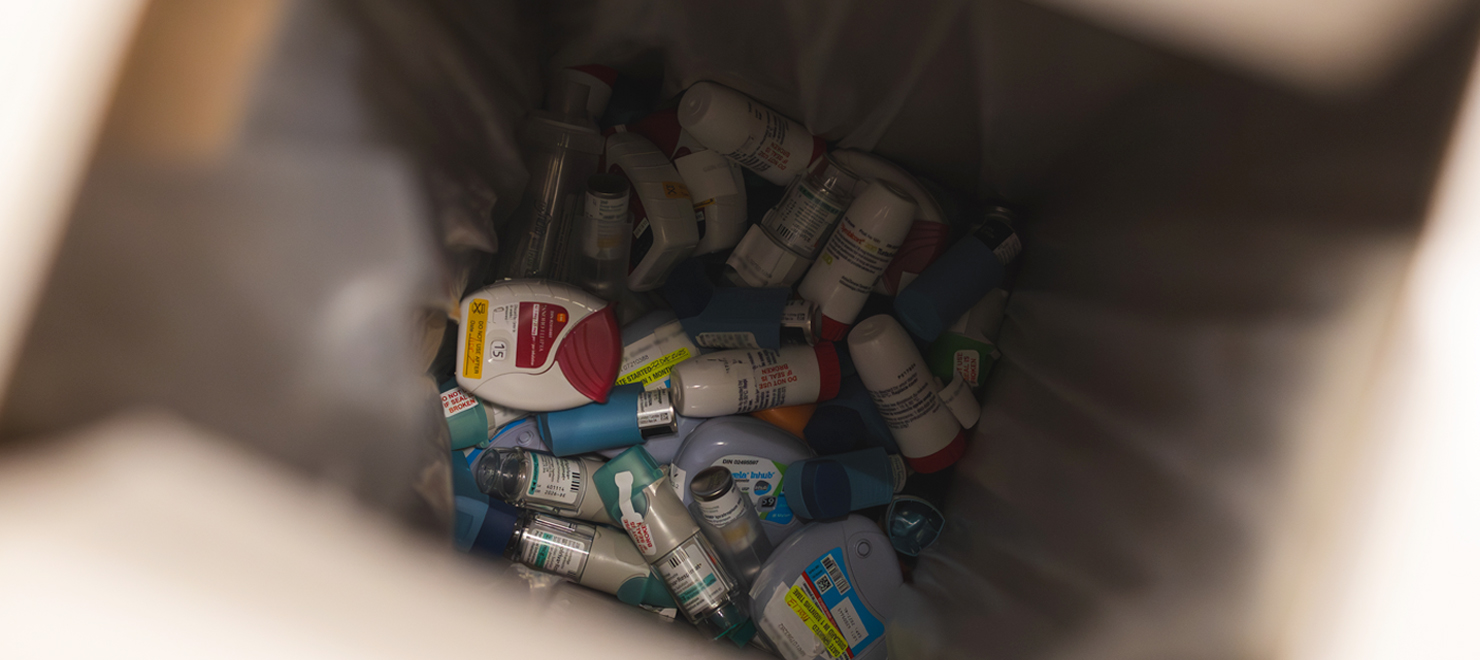
One of the clearest examples comes from a study that the Pharmacy team conducted on inhalers used to treat patients with respiratory conditions like asthma or chronic obstructive pulmonary disease (COPD). The most common type of these devices are metered-dose inhalers (MDIs), often called “puffers.”
The study analyzed MDI prescriptions, usage and returns from 100 patients over five months.
In total, 315 MDIs were prescribed; that’s about three per patient during a single stay, often because devices are left behind when patients move between departments in the hospital.
The most striking findings? Only eight per cent of all dispensed doses were used by the patients.
Yes, you read that correctly — 92 per cent of doses were unused and wasted.
This has significant environmental implications. MDIs use hydrofluorocarbon propellants – potent greenhouse gases – to deliver medication for patients who don’t have the ability to inhale it on their own. When returned inhalers are destroyed, typically through incineration, any remaining gases are released into the atmosphere.
The estimated annual emissions from these wasted doses is 315 tonnes of carbon dioxide equivalent (tCO2e), which is approximately the same as driving a car around the equator 31 times.
This problem is not unique to TOH, however. Similar patterns of waste are described in other hospitals across Canada and around the world.
Practical solutions to reduce waste
To address MDI waste our Pharmacy team has developed a series of strategies targeting how they are used, tracked and disposed of.
One of the more practical changes has also been one of the most impactful.
“We introduced tamper-proof seals on our inhalers,” says Dr. Salmaan Kanji, Clinical Pharmacy Specialist and Clinician Scientist at The Ottawa Hospital and our Research Institute. “This small sticker goes across the canister and cap of the device, so now we know if it’s been opened or used. If the seal is intact when it gets returned, it can go right back into stock for other patients.”
Dr. Kanji explains how this is a perfect example of how small changes can lead to meaningful sustainability gains.
“This is a big one for us,” he says. “One in every three inhalers were returned without evidence that the patient received a dose. Now we can tell if the inhaler has been opened, used or tampered with, so this measure alone has the potential to reduce waste by one-third.”
Other long-term solutions to further efforts in pharmaceutical waste reduction at TOH, specifically related to inhalers, include:
- Participation in a new inhaler recycling program that diverts used devices from incineration so their plastic and metal components can be recycled.
- More advocacy and lobbying for smaller inhaler sizes that better reflect short hospital stays, such as 30 doses per device instead of 200.
- In appropriate cases, prescribing alternative devices like dry powder or soft mist inhalers, which do not use propellants and have much lower environmental impacts.
“That last point is important as we evaluate the carbon costs of treatments,” says Dr. Kanji. “If there are two treatments that are equally effective, we should be choosing the one that is better for the environment if it is something the patient is comfortable with.”

Addressing broader medication waste
Another Pharmacy team study examined medication returns over the course of a month, and found that almost 38,000 individual medication doses were returned from units across our Civic and General campuses.
Most medication returns can be safely restocked if they have been stored properly, are sorted promptly, and are not expired or tampered with. In the study, only about 8.5 per cent of the returned medications had to be discarded, but that still carries significant financial and environmental costs. Over one year this amounts to hundreds of thousands of dollars and more than 41 tonnes of carbon emissions associated with production and disposal.
These findings have already led to practical changes at TOH.
Medication returns are now prioritized for rapid assessment, reducing the risk of expiry and disposal. Unit-level “report cards” have also been introduced, which show our clinical teams exactly how much medication is being returned and wasted.
While reducing environmental impacts, these changes are helping teams adjust how much medication is stocked and distributed in units to better match patient needs.
Building a more sustainable health-care system
Together, these efforts are building a culture where environmental impact is part of everyday decision-making at TOH — without compromising patient care.
Through research, education and collaboration, Dr. Kanji says that these innovations are contributing to a growing body of work on sustainability in health care, which is still emerging in North America.
“I think that we’re a big part of a small group of Canadian hospitals that are leading this charge.”

Support patient care and research at
The Ottawa Hospital
You might also like…

Dr. John Bell and Stephen Beckta inducted into the Order of Canada
The Ottawa Hospital is proud to share that on December 31, 2025, two members of our team were inducted into the Order of Canada. Congratulations Dr. John Bell and Stephen Beckta.
Everyone at our hospital plays a role in research. Here’s how
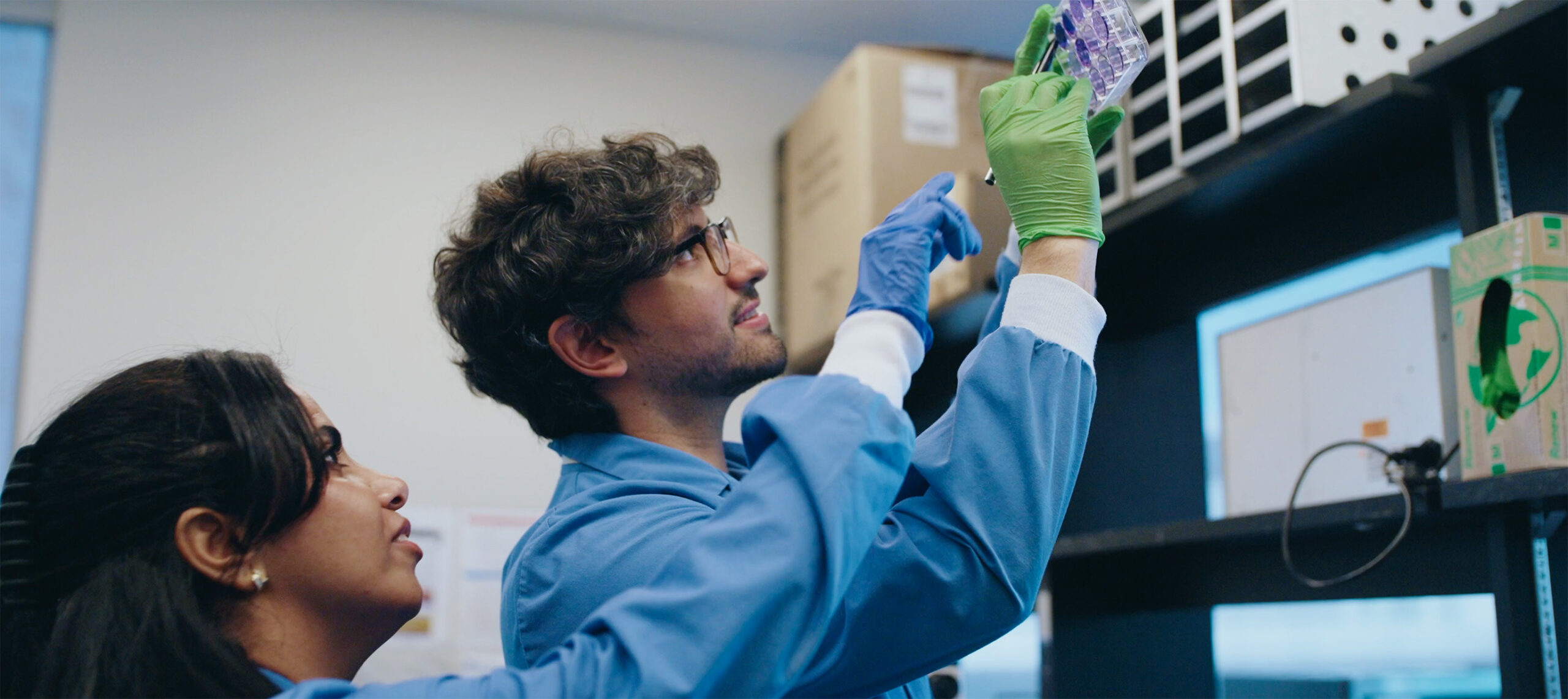
It’s Research Week at The Ottawa Hospital. Check out this video to hear from some of the incredible people fuelling our discoveries that are having an impact around the world.

Do you have a surgery coming up? Here are five “prehab” tips to help you recover faster
You’ve probably heard about rehabilitation, but what about “prehabilitation”? Prehab is all about getting your body and mind in top shape before surgery so you can enjoy a smoother, quicker recovery. Discover five essential prehab strategies from researcher Dr. Daniel McIsaac.

By thinking differently, this research team is improving the lives of people with cancer
Taking a different approach to clinical trials, the REthinking Clinical Trials (REaCT) program aims to answer some of the most important and practical questions that affect both patients with cancer and our health-care system. Find out what sets REaCT apart and makes the program so special to participants like Beth.
Does this backboard look comfortable to you?
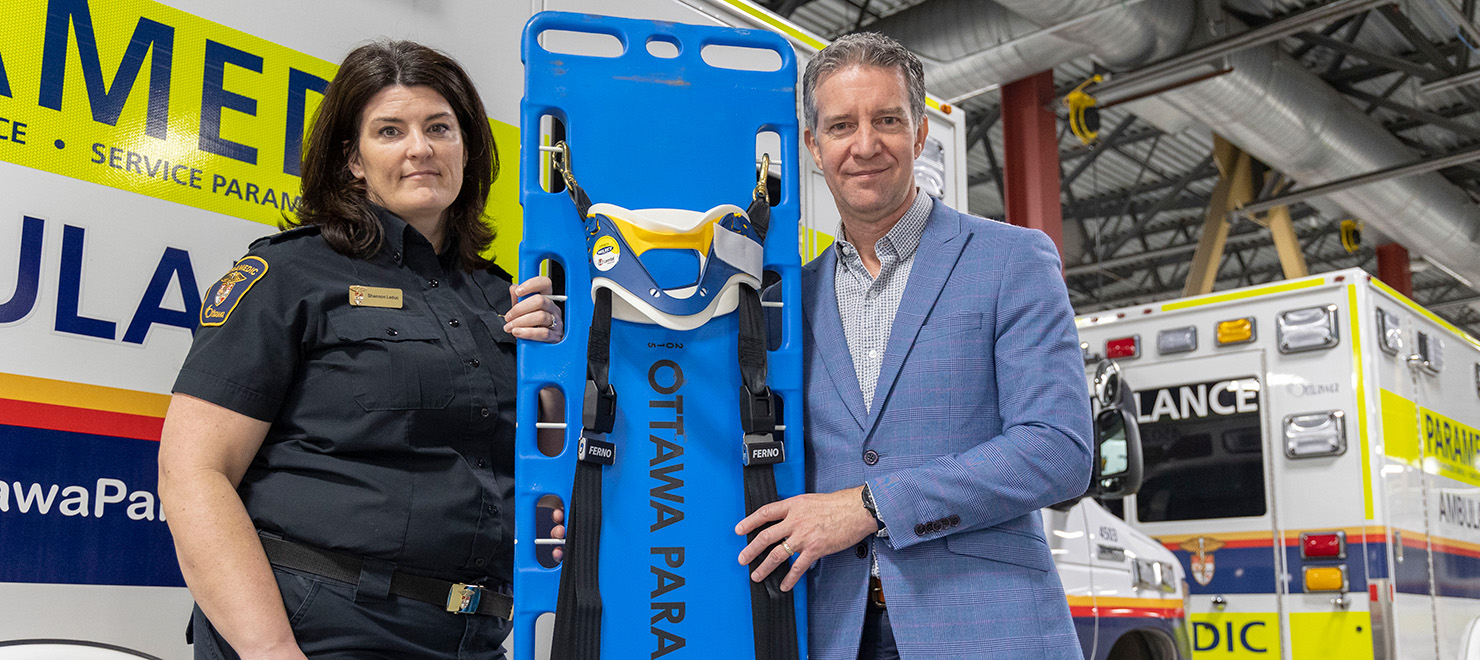
Imagine this: You’re flat on your back, strapped tight to a rigid backboard, unable to move at all. Fortunately, this is no longer the reality for most low-risk trauma patients when they’re brought to hospital in our province. Find out how researchers at The Ottawa Hospital teamed up with paramedics across Ontario to make the journey a lot more comfortable.

Ever have a tough time making a medical decision? These tools can help you
When faced with a medical condition, there may not be one clear path forward — but we have something to help you with that. The Ottawa Hospital is home to the largest collection of decision aids in the world, covering everything from various cancers to depression to allergies.