

 Print
Print  Share
Share  Text
Text  To reset, hold the Ctrl key, then press 0.
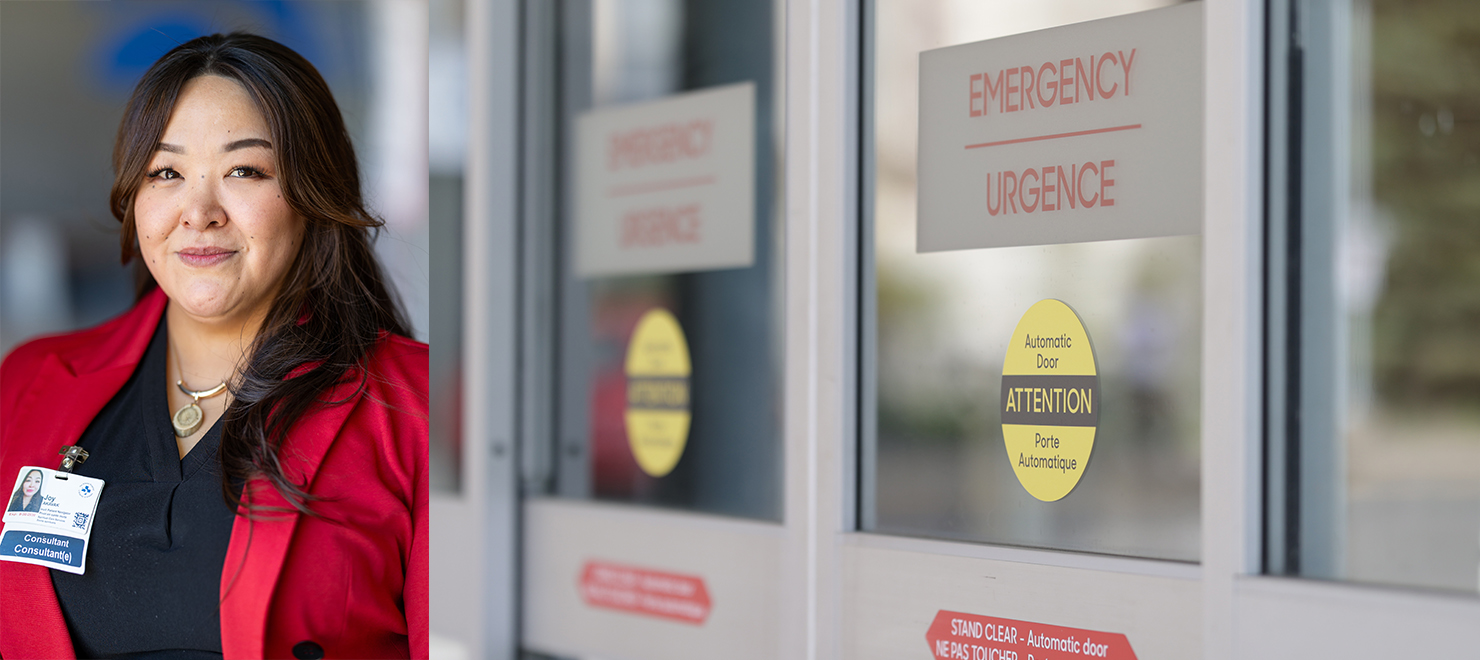
Joy Akavak grew up in an Inuit community in the far north of Canada, surrounded by friends and family and speaking Inuktitut.
Although Joy has now lived in Ottawa for 18 years, she knows exactly how overwhelming it can be for Inuit living in or visiting cities — especially when they are admitted to The Ottawa Hospital, whose medical staff on any given day is larger than the population of Iqaluit, the largest city in Nunavut.
That is just one reason why Joy was recently hired as The Ottawa Hospital’s first Inuit Patient Navigator. This is a vital cross-cultural role, as The Ottawa Hospital not only serves Inuit who live in Ottawa but is also the primary acute care provider for eastern Nunavut.
In this Q&A, get to know Joy and learn more about her role as Inuit Patient Navigator.
Could you share with us a bit more about your role?
My job is to promote access to culturally safe and respectful health care for Inuit patients, both Inuit living in the Ottawa region and those flown in from Nunavut.
I do this by working closely with Inuit patients, their families, social workers, community supports and health professionals, mostly in the Emergency Department at the Civic, where I’m based.
I advocate for shared decision making, facilitate access to support for social and cultural well-being, assist with care coordination and provide links to relevant community partners.
Why is this new role so needed?
Inuit patients continue to face systemic barriers within the health-care system. These barriers include language challenges, cultural misunderstandings, historical mistrust and difficulty navigating medical and social service systems, which can be very complex.
Without dedicated advocacy, these patients are at risk of being misunderstood, disengaging from care or being discharged without having the appropriate supports in place.
My role as Inuit Patient Navigator creates a bridge between Inuit patients and health-care providers. I help to support clear communication, informed decision making and culturally safe care.
In this role, I am also able to help address critical non-medical factors that directly impact health outcomes, including housing insecurity, transportation barriers and access to culturally specific supports.
What led you to take on this role?
My background is in social work. I have a degree in Indigenous-specific community and social services and have been working for almost eight years in this field. I was raised in the small community of Kimmirut, Nunavut, which has a population of about 400 people.
It really feels full circle for me to be here because I originally came to Ottawa when my grandmother was staying here at The Ottawa Hospital. She was here for many months, quite alone. And she only spoke a few words of English. I can only imagine how overwhelming, scary and challenging it must have been for her being in such a big city with so many unfamiliar people.
I’m very, very grateful that I’m able to support Inuit patients here because this role has been needed for so long.
Where and when can our staff and patients find you?
You can find me at the Civic Campus Emergency Department on weekdays from 11 a.m. to 7 p.m.

Support patient care and research at
The Ottawa Hospital
You might also like…

Black History Month: A time to honour, celebrate and listen
Four members of The Ottawa Hospital’s Black community reflect on what this important month means to them.
Less time charting means more time with patients: How The Ottawa Hospital is using AI to support patient care
“I’m seeing and treating more patients.” Find out how DAX Copilot, a powerful AI assistant, is helping our physicians cut down on paperwork, improve their own well-being and spend more time with patients.
Celebrating the summer solstice and National Indigenous Peoples Day: A photo essay
The summer solstice has deep spiritual and cultural significance for Indigenous communities around the world. Last week, we joined CHEO and uOttawa for a special celebration to mark this important time of year, and to recognize the rich cultures of First Nation, Inuit and Métis Peoples.
A guide to services at The Ottawa Hospital for Indigenous patients and families
At The Ottawa Hospital, we are committed to providing culturally safe care for First Nation, Inuit and Métis patients and families. We are working with Indigenous partners to identify ways we can make your time in hospital more welcoming. Here are some of the ways we’re doing that now.
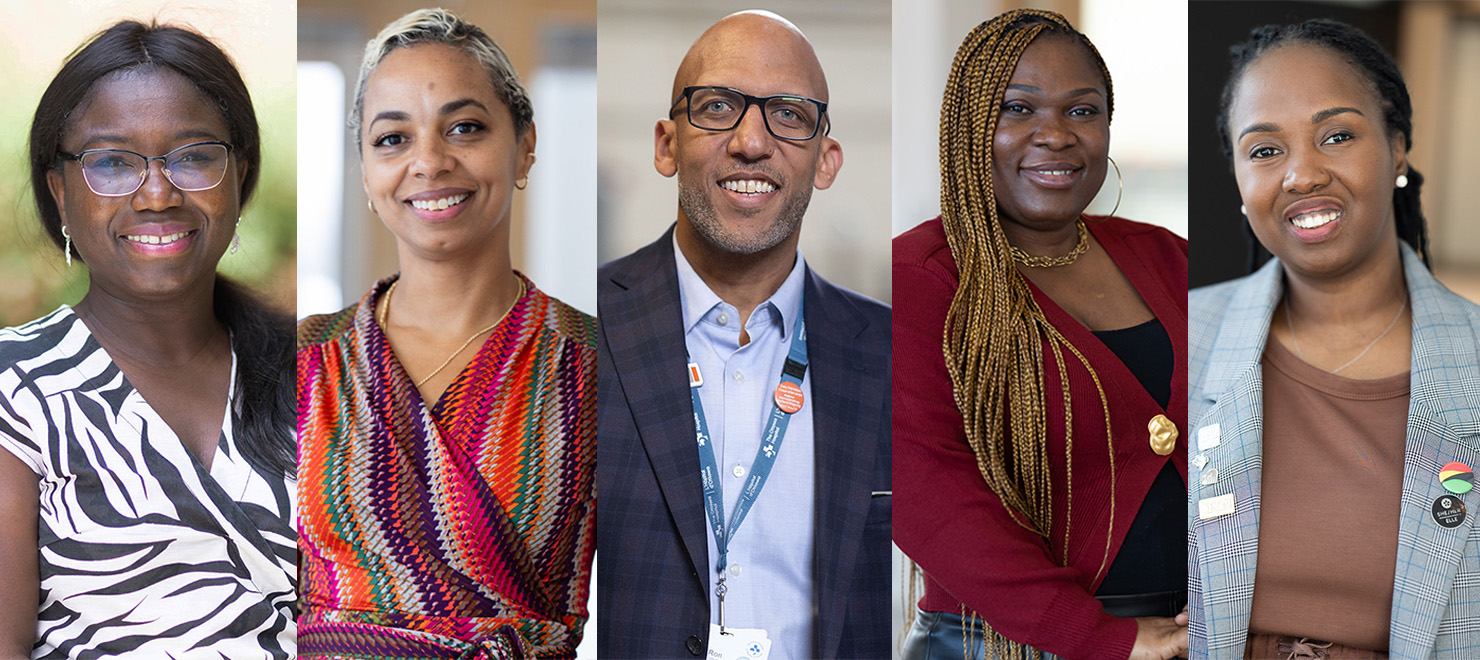
February is Black History Month
Five members of The Ottawa Hospital’s Black community reflect on what this month means to them, their heritage and the importance of building a truly equitable health care system.

This is how we care for our health-care workers
With access to family physicians, mental health support and even rejuvenating massage chairs, The Ottawa Hospital’s Wellness Program is working hard to support our staff and medical staff. For a closer look at how, check out this comprehensive guide to wellness resources at our hospital.